


Blog
ICSE Board Explained: Full Form, Subjects, Syllabus and Exam Pattern for Parents
ICSE Board: Full Form, Subjects, Syllabus and Exam Pattern for Parents
ICSE stands for the Indian Certificate of Secondary Education. It is a Class 10 examination conducted by the Council for the Indian School Certificate Examinations (CISCE), a national council set up in 1958. Students in CISCE-affiliated schools take ICSE at the end of Class 10 and ISC at the end of Class 12. This guide explains the ICSE board in plain language: which body runs it, which subjects students study, how the exam is structured, what the passing rule is and how recent results looked. In case you’re wondering about CISCE vs CBSE: Which Board Is Right, you’ve come to the right place.
What Is the ICSE Board?
Strictly speaking, ICSE is an examination and CISCE is the board that conducts it. In everyday conversation people say "ICSE board" for both, which can be confusing. According to CISCE, the council was established on 3 November 1958 and registered as a society on 19 December 1967. The first ICSE examination for Class 10 was held in November and December 1970, and the first ISC examination for Class 12 followed in March 1977.
CISCE's own website says it serves more than 3,300 schools and over 35 lakh students across five countries. Schools that follow this curriculum are known as ICSE or ISC schools. There is no dearth of CISCE Affiliated Schools in India, but picking the best one for your child can be tough.
ICSE vs ISC: What Is the Difference?
Both examinations are conducted by CISCE. The difference is the stage of school at which they are taken.
|
Feature |
ICSE |
ISC |
|
Full form |
Indian Certificate of Secondary Education |
Indian School Certificate |
|
Class |
Class 10 |
Class 12 |
|
First examination |
November to December 1970 |
March 1977 |
|
Conducted by |
CISCE |
CISCE |
At Graphic Era Global School, students follow ICSE up to Class 10 and ISC in Classes 11 and 12. The school’s dedication to each and every student is just a small snippet of What Makes ISC Schools Different From Others. Similarly, the school also does away with Misconceptions About ISC Board Schools, such as the misconception that ICSE is extremely demanding, among others.
ICSE Subjects: Groups I, II and III
ICSE subjects are arranged in three groups, as published by CISCE.
|
Group |
Type |
Subjects |
Choice |
|
Group I |
Core |
English, a second language, History and Civics, Geography |
All students take these |
|
Group II |
Elective academic subjects |
Mathematics, Science (Physics, Chemistry, Biology), Economics, Commercial Studies, a modern foreign language, a classical language, Environmental Science |
Student chooses from this group |
|
Group III |
Applied and skill-based |
Computer Applications, Economic Applications, Commercial Applications, Art, Performing Arts, Home Science, Cookery, Fashion Designing, Physical Education, Yoga, Technical Drawing Applications, Environmental Applications |
Student chooses a subject from this group |
CISCE's milestone timeline notes that Mathematics and Science became optional at the ICSE level in 1999. The subjects a student can actually take depend on the school. At Graphic Era Global School, the academics page lists English (compulsory) with Hindi, Sanskrit or French as a second language, Mathematics, the Sciences (Physics, Chemistry and Biology), Social Studies, Computer Applications and Technology, and Arts and Physical Education.
ICSE Exam Pattern: Written Paper and Internal Assessment
For Group I and Group II subjects, each subject is marked out of 100. 80 marks for the written exam and 20 marks for internal assessment. CISCE's timeline records a 20 per cent internal assessment weightage for ICSE subjects from 1999. Group III subjects follow a different split, commonly published as 50 marks for the written exam and 50 for internal assessment. Internal assessment mainly includes project work, oral tests and practical work.
The typical paper pattern for some core subjects is below. Check the current-year specimen papers on the CISCE website before the exam year.
|
Subject |
Duration |
Written paper pattern (80 marks) |
|
Mathematics |
2.5 hours |
Section A (40 marks) compulsory; Section B (40 marks), any four of seven questions |
|
Science: Physics, Chemistry, Biology |
2 hours each |
Section A (40 marks) compulsory; Section B (40 marks), any four of six questions |
|
History and Civics |
2 hours |
Part I (30 marks) compulsory; Part II (50 marks) with a choice of questions |
|
Geography |
2 hours |
Part I (30 marks) with two compulsory map-based questions; Part II (50 marks), any five questions |
ICSE Passing Marks
Published guidance on the ICSE says a student needs at least 33 per cent in each subject to qualify. Rules can be revised, so check the latest CISCE regulations or ask your school before relying on this number. Marks are only one part of a good school experience. Students (and parents) should understand that Board Exam Marks Aren't Everything, and all round, holistic development of children is extremely vital. An ICSE school helps students reach their full potential.
ICSE Syllabus: What Students Study
CISCE publishes the syllabus for each subject, and its timeline records that Class 9 and Class 10 syllabuses have been separated since 1995. Schools teach to the current syllabus, so parents should ask for the CISCE syllabus document for each subject their child will study. The board gives weight to language, written expression, projects and practical work. Understanding what Makes ICSE Schools Different from Other Boards in India can help parents make the right choice about where they’d want to educate their children. Ideally, parents should gauge CISCE vs CBSE: Which Board Is Right to get a better understanding of what they’re in for.
ICSE Result 2026 at a Glance
|
Item |
ICSE Class 10, 2026 |
|
Exam period |
17 February to 30 March 2026 |
|
Result declared |
30 April 2026 |
|
Candidates appeared |
About 2.58 lakh |
|
Candidates passed |
2,56,590 |
|
Overall pass percentage |
99.18% |
|
Girls' pass percentage |
99.46% |
|
Boys' pass percentage |
98.93% |
Pass percentages in ICSE are very high every year, so a pass rate alone does not tell you much about a school. Look instead at how the school teaches, supports struggling students and builds skills beyond exams.
Who Should Consider ICSE?
ICSE suits families who want a language-rich, project-based approach and a clear path from Class 10 to ISC in the same school. Written work and projects can feel demanding, so think about how your child learns. If you may move to other cities, compare how widely schools of each board are available there. There is no single best board for every child. Also remember that the board exam fee and the school fee are two different costs, which are explained in the article ICSE Board Fees Explained: Exam Fee vs School Fee.
ICSE at Graphic Era Global School
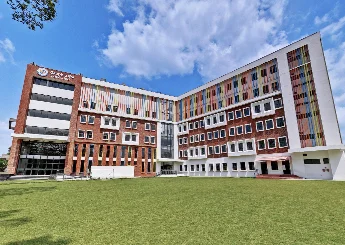
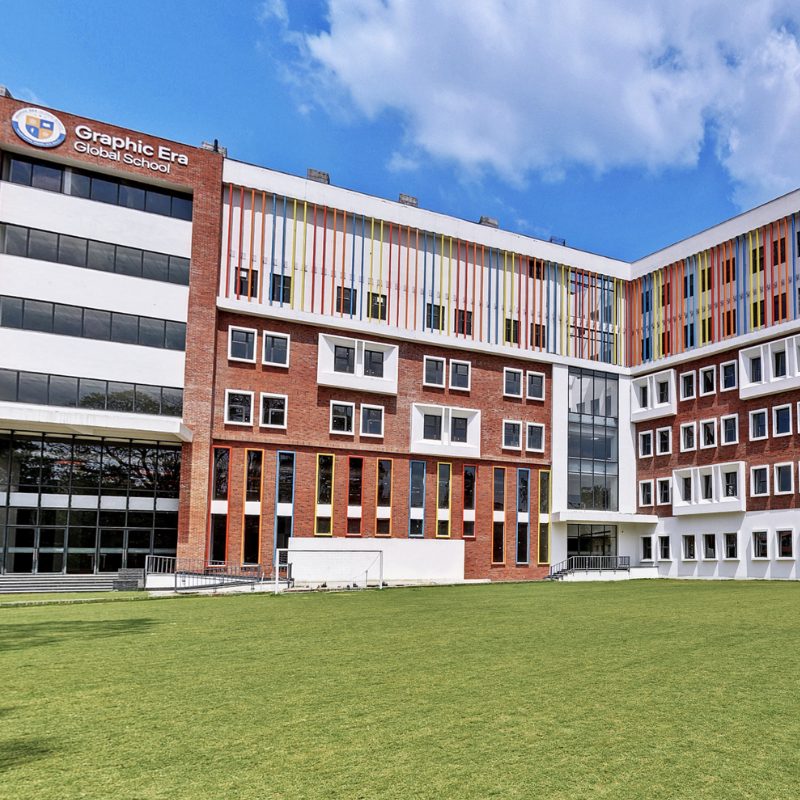
Graphic Era Global School in Clement Town, Dehradun, is affiliated to CISCE. Students follow ICSE up to Class 10 and ISC in Classes 11 and 12, with English as a compulsory language. You can read the full programme on the Academics page and the steps to apply on the Admissions page. If you are comparing schools in the city, see How to Select the Best School in Dehradun for Your Child and Best Schools in Dehradun.
FAQs
What is the full form of ICSE?
ICSE stands for Indian Certificate of Secondary Education. It is the Class 10 examination conducted by CISCE.
Is ICSE a board?
ICSE is the name of the Class 10 examination. The board that conducts it is CISCE, the Council for the Indian School Certificate Examinations. People often say "ICSE board" for both.
What is the difference between ICSE and ISC?
ICSE is taken at the end of Class 10 and ISC at the end of Class 12. Both are conducted by CISCE.
Which subjects are compulsory in ICSE?
Group I subjects are compulsory: English, a second language, History and Civics, and Geography. Students then choose subjects from Groups II and III.
How many marks are internal assessment in ICSE?
For Group I and Group II subjects, 20 of the 100 marks are for internal assessment. Group III subjects commonly carry 50 marks for internal assessment. Check the latest CISCE regulations for the current year.
What are the passing marks in ICSE?
Published guidance says a student needs at least 33 per cent in each subject. Confirm the current rule with CISCE or your school.
Does Graphic Era Global School follow ICSE?
Yes. The school is affiliated to CISCE and follows ICSE up to Class 10 and ISC in Classes 11 and 12.
RELATED Blogs



 Phone
Phone Email
Email


