



Blog
CISCE Affiliated Schools in India: A Complete Guide for Parents
CISCE Affiliated Schools in India: A Complete Guide
What Is CISCE?
CISCE stands for the Council for the Indian School Certificate Examinations, a national-level education board headquartered in New Delhi. It conducts two major examinations recognised across India — ICSE for Class 10 and ISC for Class 12 — and lays down the curriculum, assessment structure, and school-recognition standards that affiliated schools must follow.
What Does “CISCE Affiliated” Actually Mean?
A school does not automatically get to call itself “ICSE” or “ISC.” Affiliation is a formal recognition granted by CISCE only after its team inspects the school's infrastructure, faculty qualifications, management practices, and curriculum delivery. This process applies separately for Class 10 (ICSE) and Class 11–12 (ISC) — a school may hold ICSE affiliation first and apply for ISC affiliation later, once it demonstrates it can support senior secondary education.
Every CISCE School Has a Unique School Code
As part of the affiliation process, CISCE assigns every recognised school a unique school code. This code is a simple way for parents to verify that a school is genuinely affiliated, rather than just using the term informally. For example, Graphic Era Global School in Dehradun is affiliated to CISCE, New Delhi, and holds the official school code UT111.
How to Verify a School Is Genuinely CISCE Affiliated
Before enrolling a child, parents can check a few things directly: the school's official CISCE school code, its “Mandatory Disclosure” document (which CISCE-affiliated schools are required to publish, typically covering infrastructure, faculty, and compliance details), and its listed affiliation status on the school's own website. Genuine CISCE schools are usually transparent about this information rather than making vague claims.
Why CISCE Affiliation Matters for Your Child's Future
Affiliation isn't just paperwork — it determines whether your child's Class 10 and Class 12 certificates are nationally recognised for further education and competitive exams. It also means the school follows a curriculum and assessment standard set centrally by CISCE, rather than an informal or unrecognised structure, giving families consistency if they relocate or if the student applies to colleges across India.
Example: A CISCE Affiliated School in Dehradun
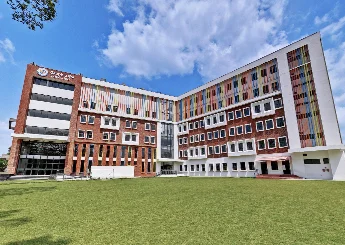
Graphic Era Global School (GEGS), established in 2016 in Clement Town, Dehradun, is affiliated to the Council for the Indian School Certificate Examinations, New Delhi (School Code: UT111), and follows the National Education Policy (NEP 2020) alongside the CISCE curriculum. The school's ISC affiliation for Classes 11 and 12 was granted after CISCE's inspection of its infrastructure, faculty, and academic facilities, and covers a wide subject range including Computer Science, Commerce, Humanities, and Science streams.
Conclusion
CISCE affiliation is one of the simplest ways for parents to confirm a school offers a genuinely recognised, nationally standardised education. Checking the school code and Mandatory Disclosure document takes only a few minutes and can save families from confusion later.
FAQs
How do I check if a school is CISCE affiliated?
Look for the school's official CISCE school code and check its published Mandatory Disclosure document, which affiliated schools are required to make available.
What is a CISCE school code?
It's a unique identifier assigned by CISCE to every affiliated school as proof of genuine recognition. For example, Graphic Era Global School's code is UT111.
Is CISCE affiliation the same as the ICSE board?
CISCE is the governing council; ICSE (Class 10) and ISC (Class 12) are the examinations it conducts. A school is “CISCE affiliated” to offer these examinations.
Can a school be affiliated for ICSE but not ISC?
Yes. Schools often start with ICSE (Class 10) affiliation and apply separately for ISC (Class 11–12) affiliation later, once inspected and approved.
RELATED Blogs



 Phone
Phone Email
Email


